Torso & Head
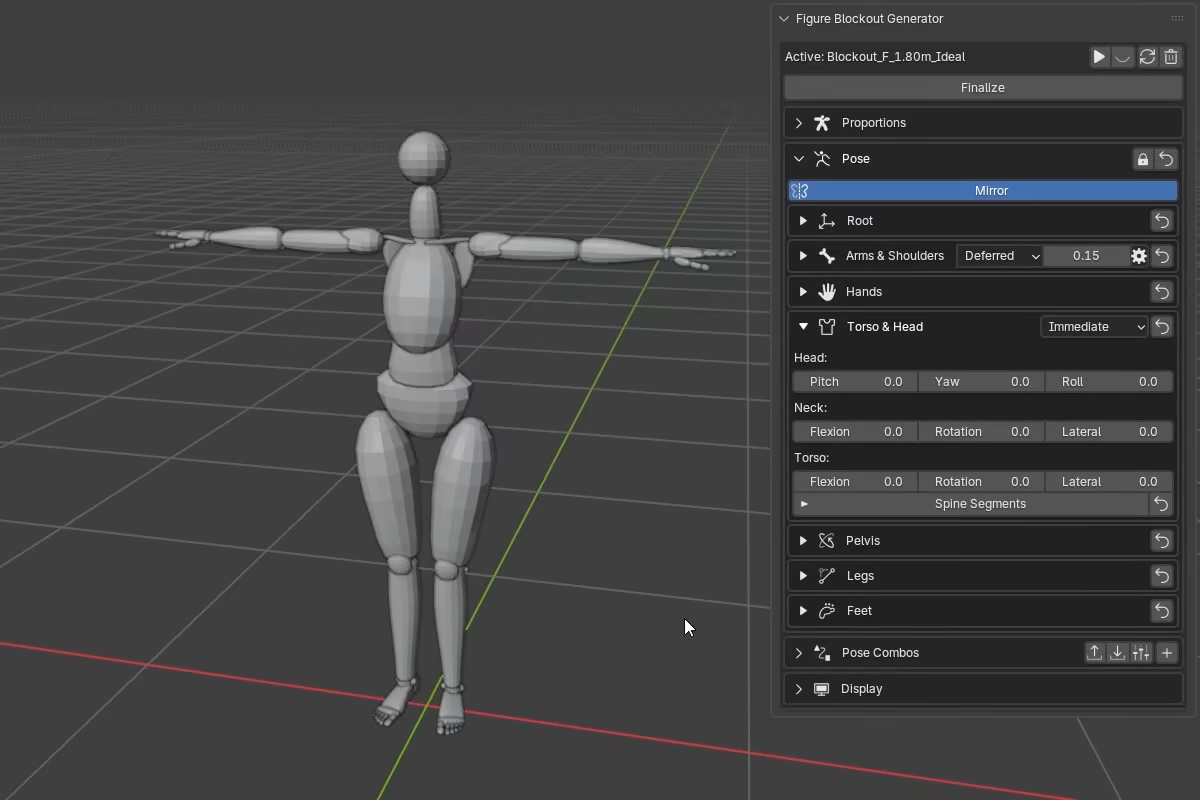
Global controls set the broad trunk and neck shape. Per-segment controls let you refine specific regions where needed.
At a glance
Torso -- three global controls distributed across the spine:
Flexionbends the trunk forward or backward -- lumbar-dominant.Rotationtwists the trunk -- thoracic-dominant.Lateralside-bends the trunk -- more evenly shared.
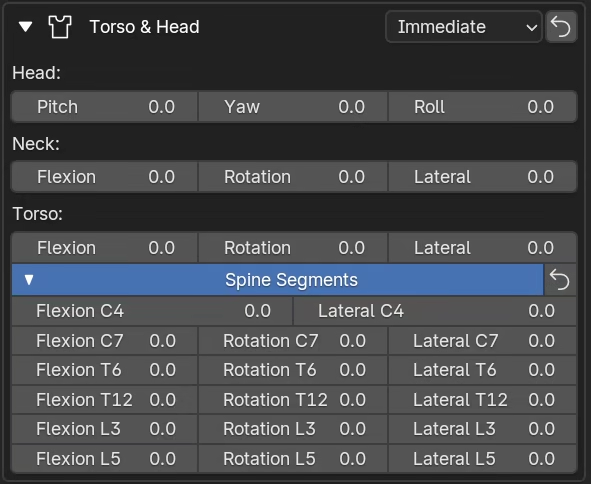
Spine Segments -- per-segment additive refinement for L5, L3, T12, T6, C7, and C4.
Neck -- three global controls distributed across the cervical spine.
Head -- Pitch, Yaw, and Roll applied on top of the neck orientation.
Spine regions
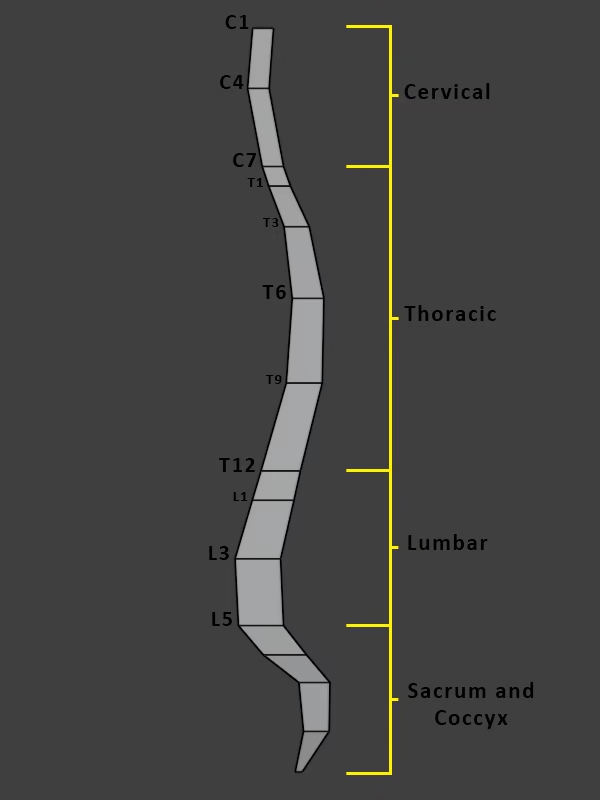
The spine controls reference specific regions and vertebrae by their anatomical labels. The spine runs from bottom to top through four regions:
- Sacrum and coccyx -- the base of the spine, fused into the pelvis. These segments have no independent pose controls -- they move rigidly with the pelvis.
- Lumbar -- the lower back. The controls reference two lumbar vertebrae: L5 (lower lumbar) and L3 (mid lumbar).
- Thoracic -- the mid and upper back, where the ribs attach. The controls reference T12 (lower thoracic) and T6 (mid thoracic).
- Cervical -- the neck. The controls reference C7 (lower cervical) and C4 (mid cervical). C1 (at the skull base) is the head's rotation pivot.
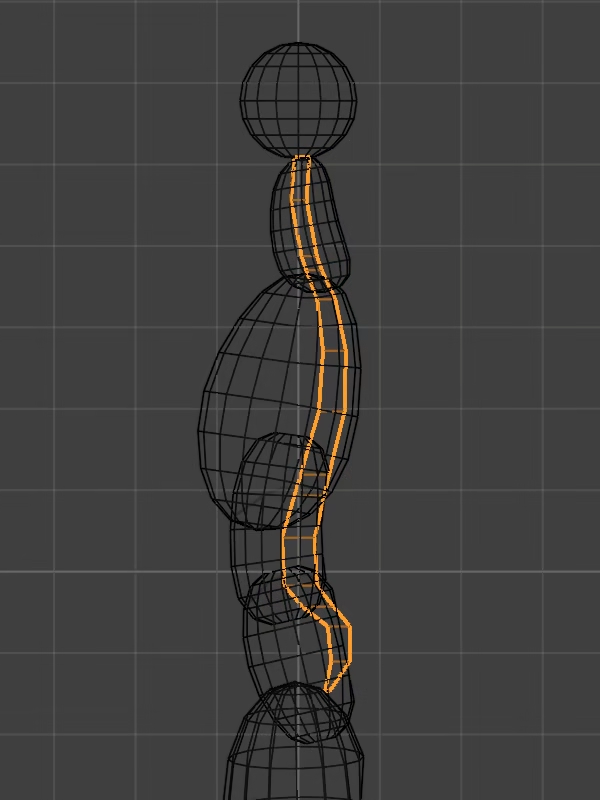
Torso
Flexion, Rotation, and Lateral are the global spine controls. Each axis is distributed differently across the segments to reflect how the real spine moves.
Flexion bends the trunk forward (positive) or backward (negative). The motion is lumbar-dominant: the lower back carries most of the bend.
Rotation twists the trunk. The motion is thoracic-dominant: the mid and lower thoracic segments carry most of the rotation while lumbar rotation stays limited. This matches real anatomy where thoracic vertebrae rotate more freely than lumbar.
Lateral side-bends the trunk. More evenly shared across the lumbar and thoracic spine compared to the other two axes.
Segment distribution
The exact split for each axis:
| Segment | Flexion | Rotation | Lateral |
|---|---|---|---|
| L5 (lower lumbar) | 40% | 5% | 30% |
| L3 (mid lumbar) | 35% | 25% | 30% |
| T12 (lower thoracic) | 20% | 40% | 25% |
| T6 (mid thoracic) | 5% | 30% | 15% |
This explains why a strong Flexion reads as a lumbar bend while a strong Rotation reads as a ribcage twist.
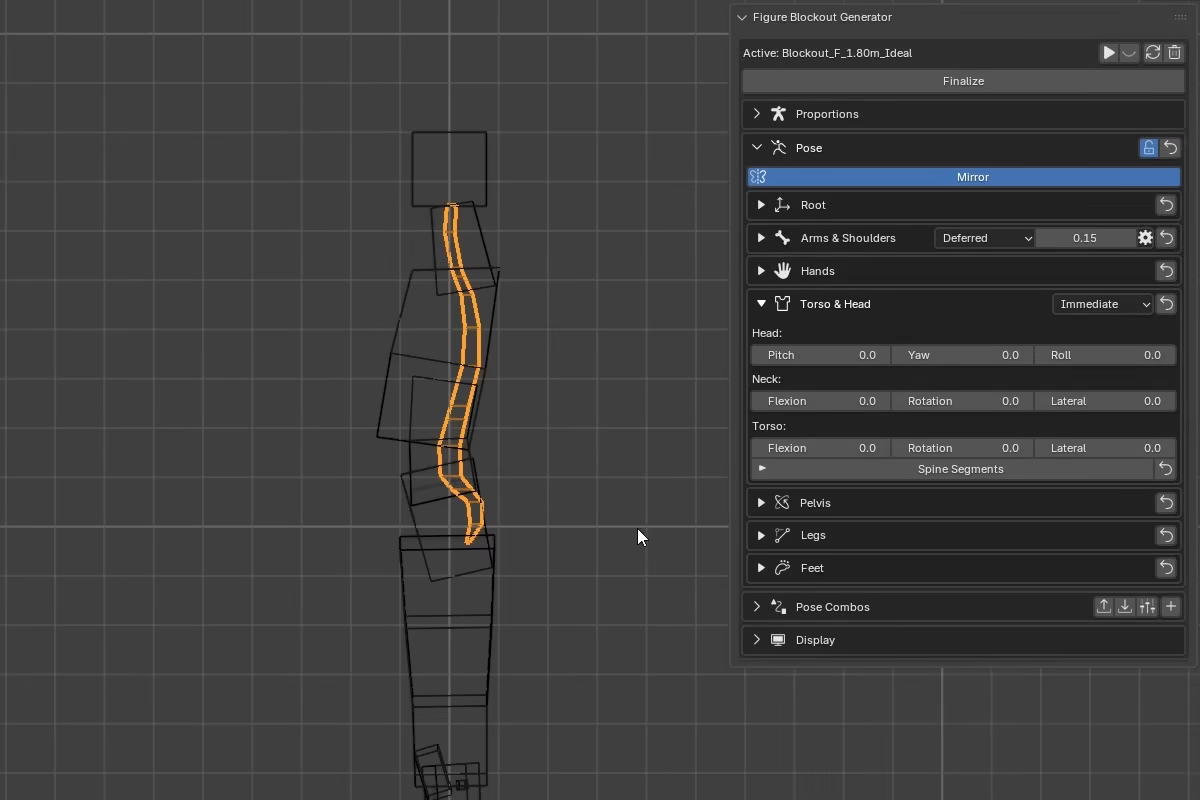
Spine Segments
Spine Segments opens a per-segment refinement table. Each of the four thoracic and lumbar segments (T6, T12, L3, L5) exposes Flexion, Rotation, and Lateral channels. These are additive on top of the global torso result.
Neck
Flexion, Rotation, and Lateral distribute across two cervical regions -- the lower cervical (C7) and mid cervical (C4).
| Segment | Flexion | Rotation | Lateral |
|---|---|---|---|
| C7 (lower cervical) | 60% | 100% | 80% |
| C4 (mid cervical) | 40% | 0% | 20% |
Rotation is concentrated entirely at C7 -- the lower cervical region handles all neck rotation. Flexion and Lateral are shared between the two regions, with C7 carrying more of both.
The cervical segments in the Spine Segments foldout add local refinement on top of the neck result. C4 exposes Flexion and Lateral only -- it has no rotation channel, matching the distribution above.
Head
Pitch, Yaw, and Roll are applied on top of the neck orientation.
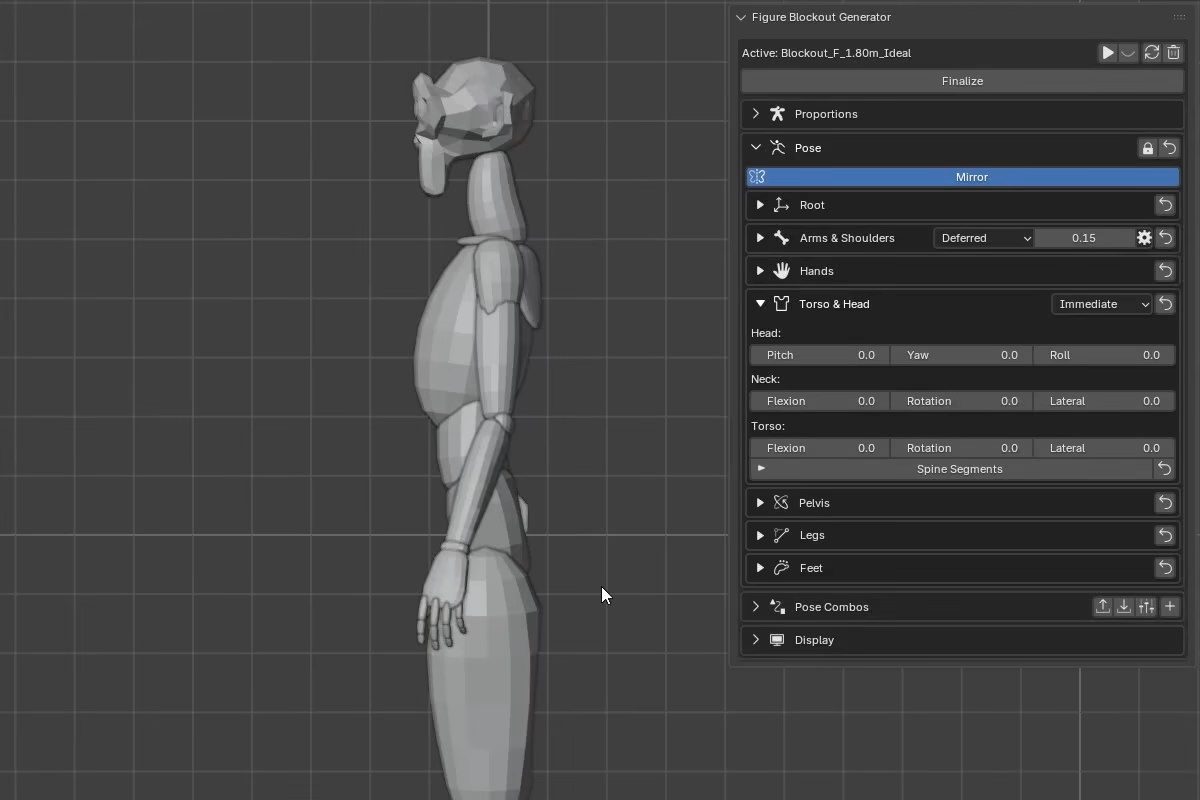
Pitchnods the head up or down.Yawturns the head left or right.Rolltilts the head to the side.
Torso Bend Updates
The section header includes the Torso Bend Updates control. It determines when ribcage, waist, and spine bend deformation recalculates as you drag pose values. For details on the available modes, see How FBG Works.